
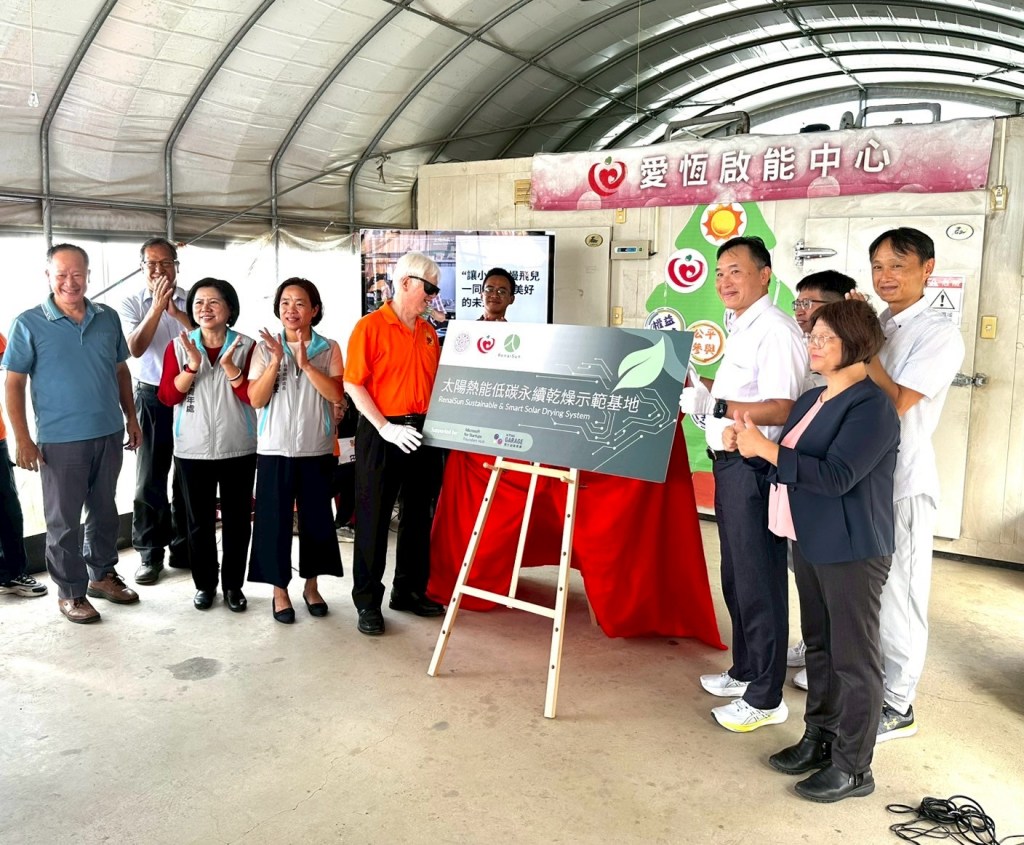
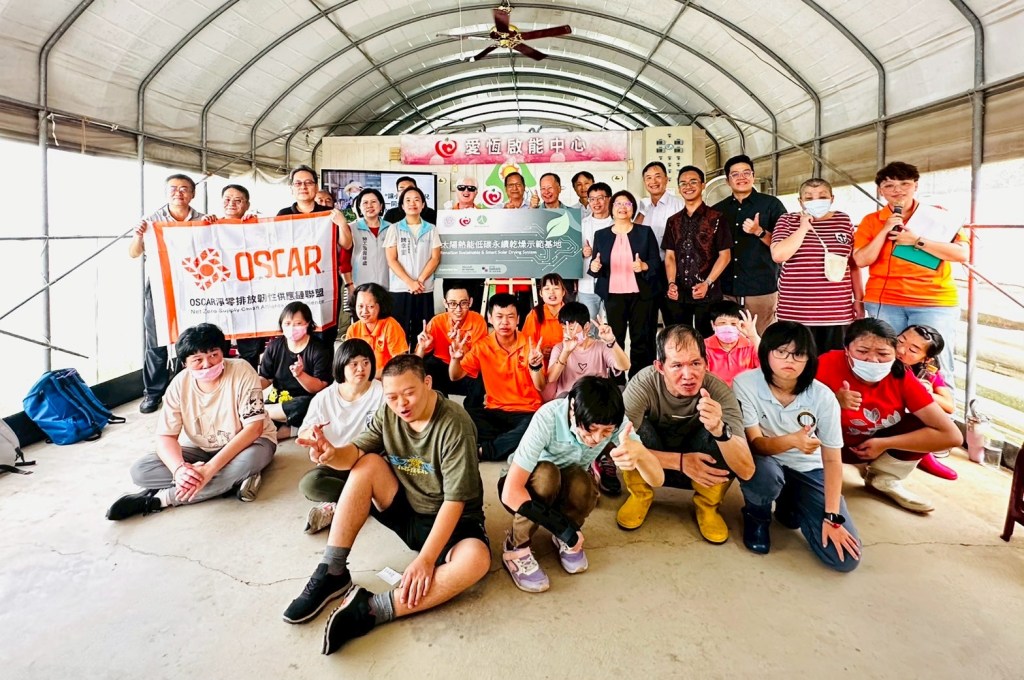
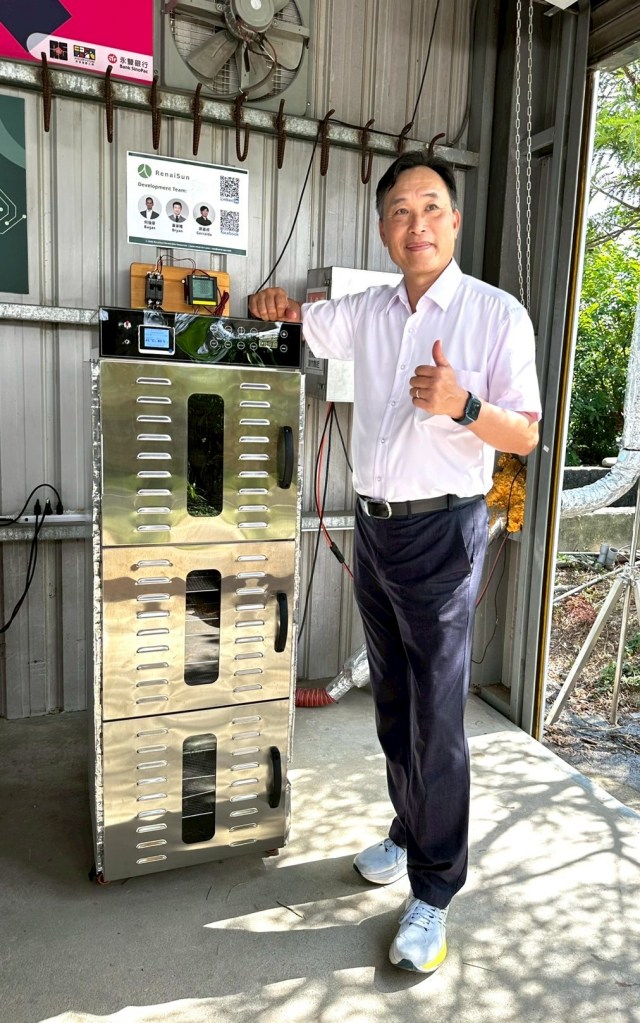
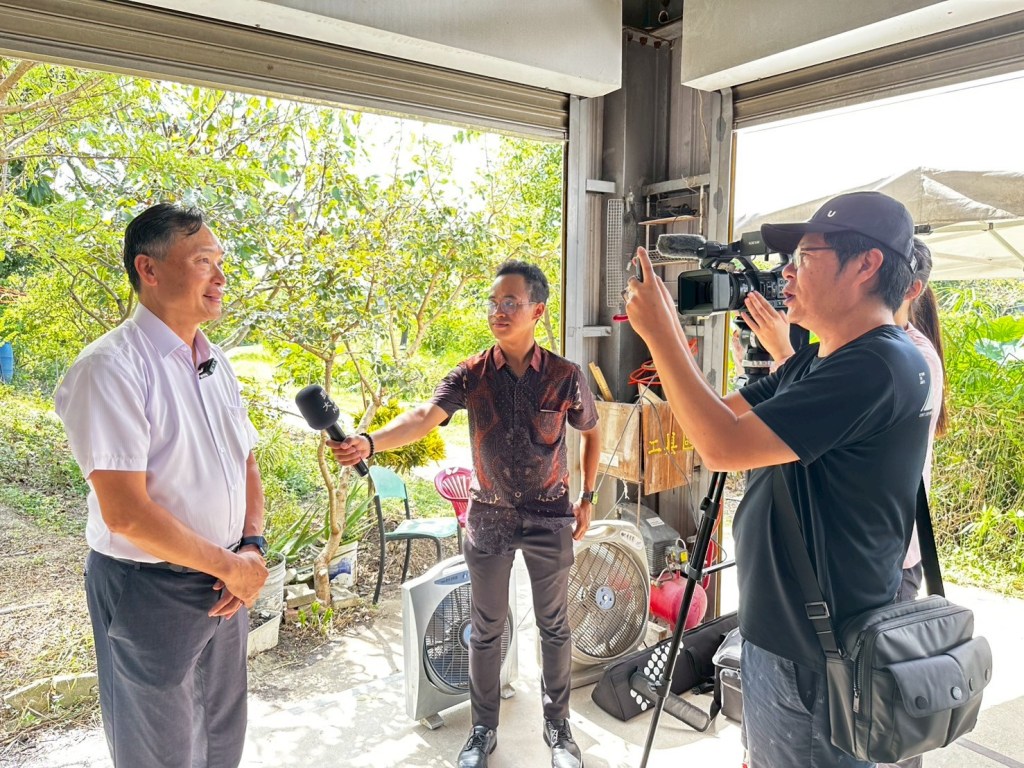
Ai-Heng Empowerment Center and RenaiSun team have officially opened a Solar-Thermal Low-Carbon Drying Demonstration Base at Ai-Heng Lohas Garden. The facility pairs solar heat with AI-driven monitoring to raise product quality for smallholder farmers while advancing social inclusion by training Ai-Heng’s young adults with disabilities in farm-to-processing skills.
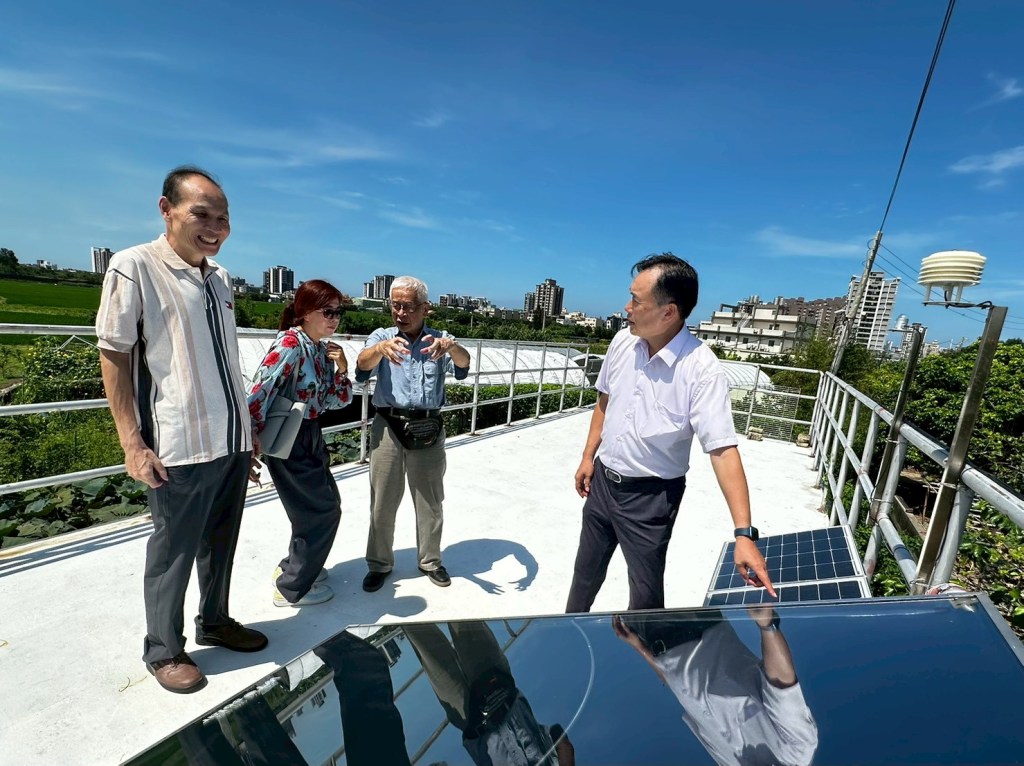
The system runs primarily on solar energy during the day. When supplemental power is needed at night, it draws on off-peak tariffs. Compared with conventional electric drying, the setup cuts energy use by an estimated 30–70%, lowering costs and carbon footprint.
Field results at Ai-Heng show strong quality gains. Herbs such as mint and culinary aromatics can be dried in about three hours while retaining color and aroma. The AI control loop tracks temperature, humidity, and process states to avoid over-drying or scorching, producing more consistent outcomes.
For small farms that often struggle with weather and process variability, the integrated quality-assurance workflow stabilizes outputs and supports better pricing and buyer trust. The base is designed for practical learning: participants handle cultivation, harvesting, sorting, sun/forced drying, and packaging, guided by a simple interface with AI assistance. The model lowers barriers for new farmers and creates real, accessible work pathways for people with intellectual and developmental disabilities.
The collaboration reflects two years of work from the RenaiSun research team to pair solar-thermal hardware with smart controls. Our goal is simple and practical: raise the value of local crops, reduce energy use, and include more people in meaningful work, in line with the spirit of the UN Sustainable Development Goals.
 Renaisun
Leave a comment